A Bronx Tale
The hiphop roots of my childhood hood: Co-op City

Over 20 years ago, I penned an essay called “Bronx Science,” about growing up in the northeast Bronx neighborhood of Co-op City during the 1970s and ’80s. That walk down memory lane opened the first book I ever wrote, which I tentatively titled The Death of Hip-Hop. In the decades since, my reports of the culture’s demise proved—thankfully—to be greatly exaggerated. Nowadays, I serve as cultural historian of The Hip Hop Museum, scheduled to open in the South Bronx late this year. And my mom long ago relocated from Houston back to the Co-op City where she raised me. Some things there have changed, but for a whole lot, the song remains the same.
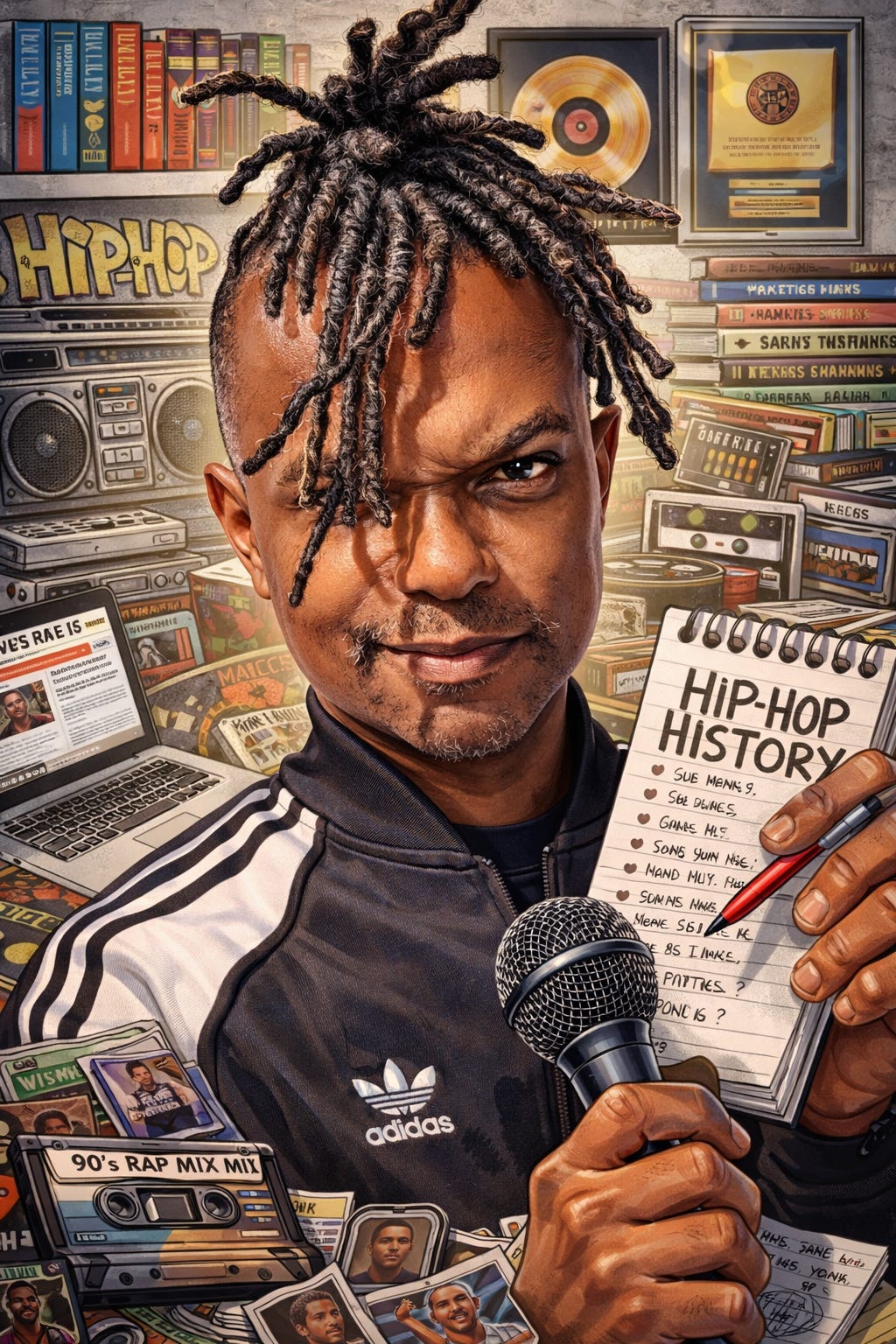
That original essay started with a quote from Ayn Rand’s The Fountainhead, a description of the fictional, Howard Roark-designed Cortlandt Homes that sounded a lot like the tower buildings of Co-op City: “…[E]ach made in the shape of an irregular star with arms extending from a central shaft. The shafts contained elevators, stairways, heating systems and all the utilities. The apartments radiated from the center in the form of extended triangles…” My childhood apartment was on the 27th floor (with a terrace) and our building sounds something like the Cortlandt Homes.
Co-op City’s 35 buildings comprise three building styles. Tower buildings, the tallest, reach 33 stories high. Chevron buildings (named for their wide-V shape) extend to 24 floors and triple-core buildings stretch two flights higher. Various shades of brick brown and beige make up the color scheme, including the townhouse-style apartments spread throughout the five official sections of Co-op, as well as eight parking garages. Walking the well-tended greenways surrounded by these residential skyscrapers, the year could be 1973 (when Co-op City was completed) or 1993 or 2023. The area’s look stays visually static, largely unchangeable.
Since publishing “Bronx Science,” Co-op City became the largest naturally occurring retirement community in the United States. My family moved to Section 5 from the South Bronx in 1974; many of the original residents from that period must have remained and retired. The early success of Co-op originated in large part from the white flight of residents who fled for the northeast Bronx after developer Robert Moses’s creation of the Cross Bronx Expressway. The decimated South Bronx neighborhoods that suffered from benign neglect in the aftermath of Irish, Italian and Jewish immigrants leaving ended up creating the global youth culture of hiphop—a phenomenon that took place during my wonder years in Co-op City.
The streets of Co-op are all named with the first five letters of the alphabet (i.e., Alcott Place, Baychester Avenue, Carver Loop, Debs Place, Elgar Place, etc.). But let’s take a detour down some hiphop boulevards for a moment. However multicultural a Co-op upbringing may have been in the ’70s and ’80s, the Black and brown children of its middle-class residents fell under the sway of hiphop as much as any other youth in the borough. The Bronx, after all, created hiphop. Feeling as if I could reach out and touch the record industry led me to pursue my early career in music journalism. Many of my peers felt the same, an attitude that led them down related paths.
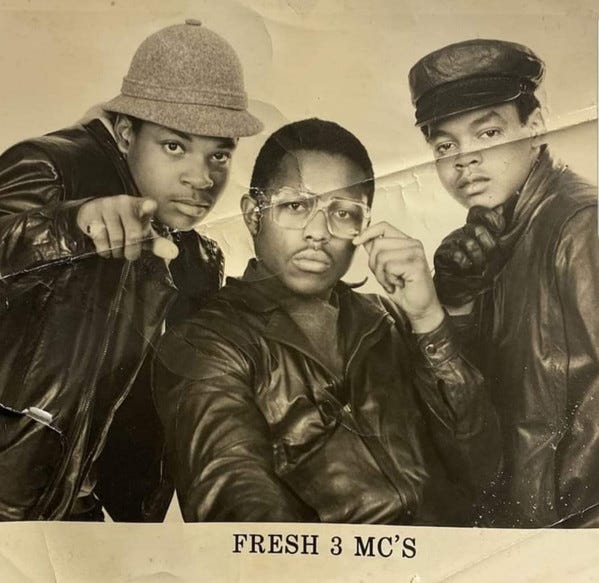
My Facebook feed recently revealed a reunion between two siblings who lived one building away growing up: John Muhammad and his brother, Marke Reed, aka Born Unique. When John and I were enrolled in middle school, circa 1982, Unique signed to Profile Records (home to Run-DMC) as a member of the Fresh 3 MCs, releasing the rap classic “Fresh” the following year. America’s largest housing development project, Queensbridge Houses—located in the Long Island City neighborhood of Queens—carries a well-deserved reputation as a hiphop hotbed. Nas, Roxanné Shante, DJ Marley Marl and others hail from there. However, Co-op City is the largest cooperative apartment complex ever built (housing over 45,000 residents), with such a sizable African American community that some hiphop expression was bound to come out of it.
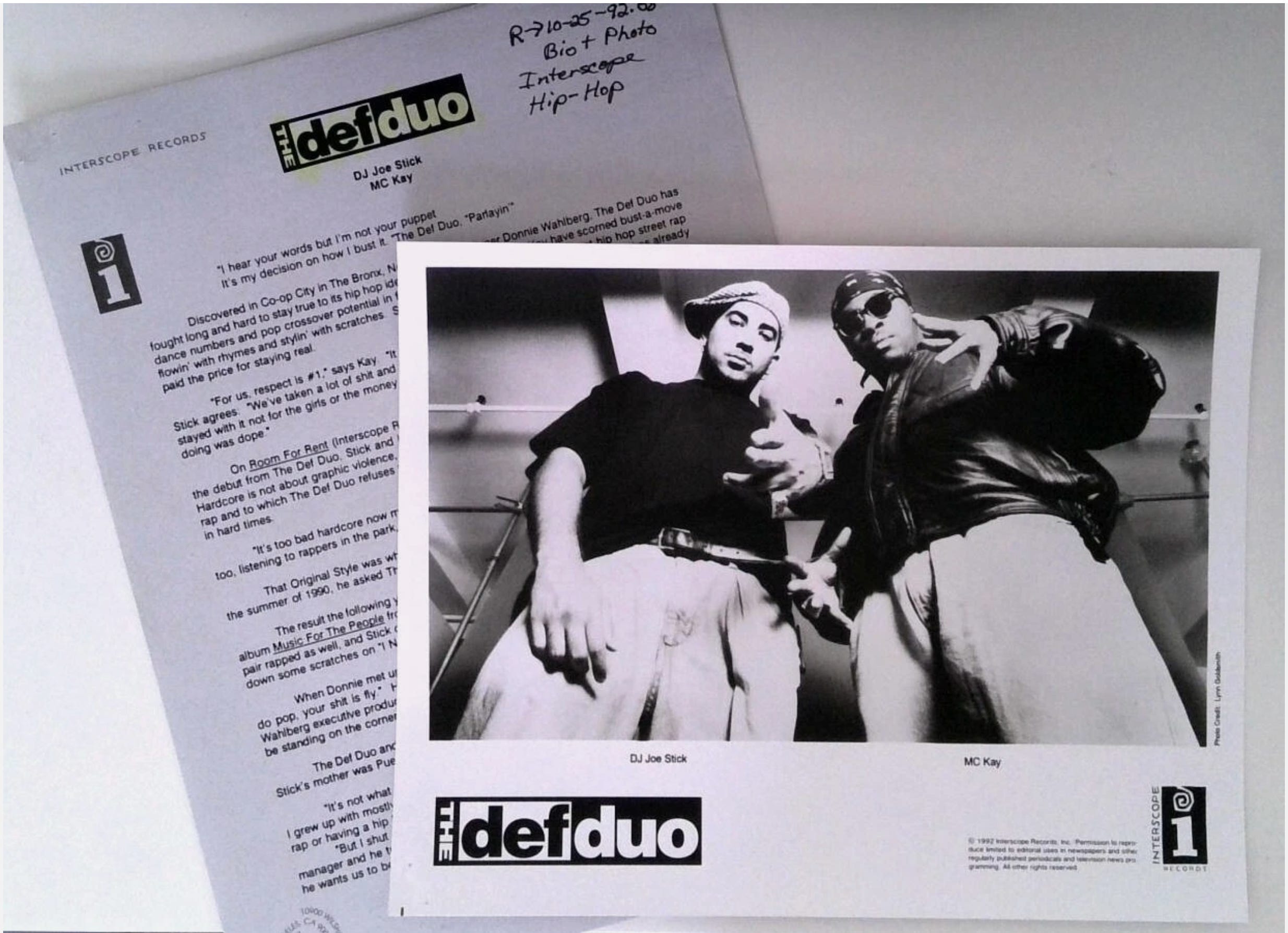
To be clear, Co-op is no Queensbridge. And yet Joseph Verde aka DJ Joe Stick, a Puerto Rican-Italian friend I used to make prank calls with, inked a deal with Interscope Records in 1992 as DJ of the Def Duo. Signed by Donnie Wahlberg of New Kids on the Block fame, Joe Stick ended up with production credits on the last album by Marky Mark & the Funky Bunch (before Mark Wahlberg took off for Hollywood).
There were other local legends. Dennis Bell taught a recording studio class at Truman High by virtue of having co-produced “The Show” and “La Di Da Di,” massive hits by Doug E. Fresh & the Get Fresh Crew. Bell, who is white, also conducted the high school choir—all of whom made up the New Voices of Freedom, performing “I Still Haven’t Found What I’m Looking For” alongside U2 in 1987. The rehearsal and performance of my childhood friends appears in the U2 concert film Rattle and Hum and its soundtrack.
During these mid-1980s, Bell also co-produced the lesser-known “Party People” by Micki Dee and the Tru-Crew featuring Kanei. Kelly “Kanei” Hawkins lived in my building. Classmate Allison Ashmawy joined a freshly signed female rapper named Queen Latifah after graduation, dancing in music videos as one of her Safari Sisters. When hiphop backup dancers were a major aspect of a rapper’s live presentation, Mike Swift—another Truman grad full of dance moves—also joined the wave, appearing in video clips and touring all around America with MCs fresh out of high school. I once bumped into Mike in Daytona Beach, part of a live rap performance (Nice & Smooth?) filmed for MTV Spring Break in ’92.
There’s a lot of unsung names here to absorb. Despite its almost suburban reputation, coming of age in Co-op City as an ’80s teen meant spending formative years in the Bronx during the golden age of hiphop. Big Tigger, longtime host of BET’s Rap City in the 1990s, went to Truman High and played on Co-op City basketball courts. Rap legend Kurtis Blow spent some years living in Co-op. So did the late radio personality known as Fatman Scoop.
But there’s more to Co-op than hiphop.
Eleven years back, I walked my young sons through some personal Co-op landmarks after a visit with their grandma, just for some keepsake photos. They posed on the rocky shore of Givan Creek near the Pelham Bay Railroad Bridge, where horseshoe crabs regularly washed up when I was young. They posed on the handball courts formerly populated by B-boys with boomboxes playing “Roxanne, Roxanne.” They posed sitting on top of concrete outdoor steam funnels, the true purpose of which I’ve never really understood.
Someone purged the sandboxes. After years of sandy elevator floors, they must have been phased out in favor of plastic playground areas sometime in the 2000s. Marking the most major change from my youth stands the Mall at Bay Plaza. Yes, different roadside McDonald’s restaurants in nearby Connecticut used to bus in kids from Co-op City to work their grills and cashiers (kids in wealthy towns like Darien refused to work at fast food joints), and now Co-op has its own McDonald’s on Bartow Avenue. But the Mall at Bay Plaza has an entire food court, along with H&M, Macy’s, Marshalls and all the rest of the regulars. An AMC multiplex replaced the local two-theater City Cinema long ago. (For sure I saw WarGames there, Rambo II and Jaws 3-D.) Come 2027, the Metro-North Railroad promises a Co-op City station on its New Haven Line, joining the express bus to Manhattan that connects the rather isolated neighborhood to the rest of the world.
What else is there to know about Co-op City? The entire apartment complex was built on infilled marshland. Local entertainment used to include Rye Playland, a relatively close-by amusement park in Westchester County, but Co-op City property itself used to host a theme park called Freedomland USA. In what sounds like a knockoff of Disneyland attractions like Frontierland and Adventureland, Freedomland was themed after late 19th century American history. The park filed for bankruptcy in 1964, paving the way for Co-op City.
The Mitchell-Lama program, drafted into law in 1955, promised affordable housing for middle-income families, and Co-op City came about as a direct result of its creation. Residents of Co-op elect their own board to run the community; they’re all technically tenants-shareholders, owning shares in the Riverbay Corporation that owns the buildings. Supreme Court justice Sonia Sotomayor once lived in Co-op, as well as novelist Richard Price and, infamously, the “Son of Sam” ’70s serial killer, David Berkowitz.
“What is it like to come from a place like Co-op City?” I once asked. “If I could make you understand that, I could make you understand the Bronx and perhaps nascent hiphop culture besides, for Co-op City is the Bronx, and the Bronx is proof that adversity and desperation are the seeds and fertile soil of invention; a locale where the oppositional coexistence of multiculturalism and white flight reiterated a familiar, inherently American allegory while simultaneously flipping the script.”
After 20 years, even with all the Didion-influenced hyperbole, I still stand by all that.